This quote is from the Ming Dynasty Compendium of Materia Medica (Bencao Gangmu; 本草綱目) that was compiled by acupuncturist, herbalist, naturalist, pharmacologist, Li Shizhen (1518–1593) over 27 years of his life. The compendium also records less-metaphorical but still poetic historic accounts of amber formation, such as these words from alchemist and physician Tao Hongjing (456–536),
“There is an old saying that the resin of fir-trees sinks into the earth, and transforms itself [into amber] after a thousand years. When it is then burned it still has the odor of fir-trees. There is also amber, in the midst of which there is a single bee, in shape and color like a living one.”[ii]
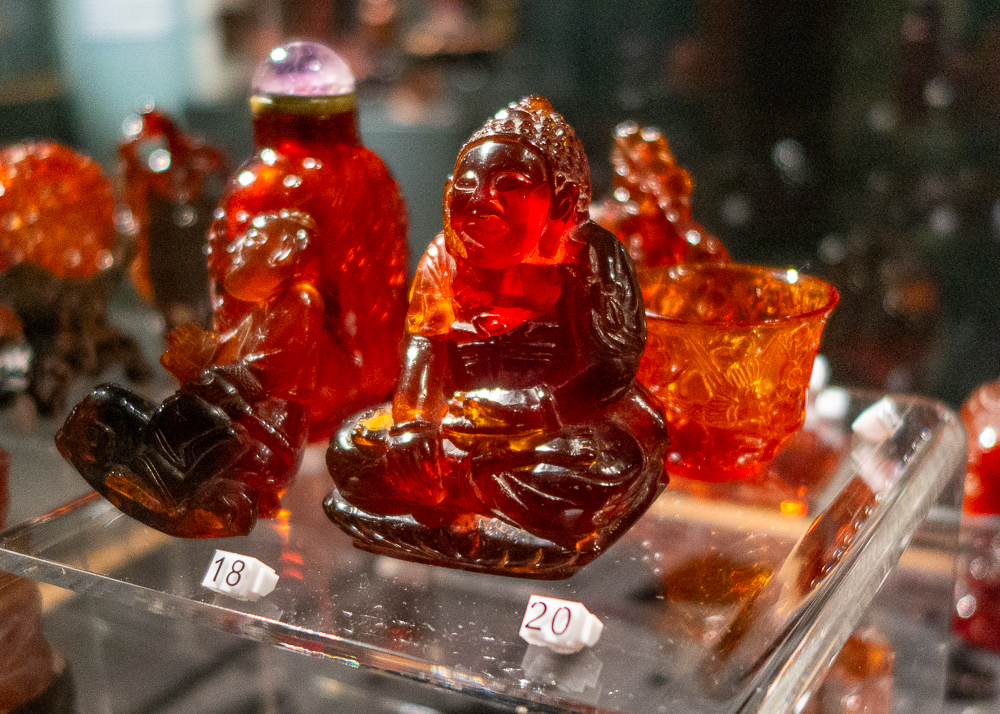
Long valued in China as incense and medicine, amber’s rich, tiger-like colours and frequent inclusions of prehistoric insects and plant matter have also captivated artists through millennia. Chinese trade in Baltic amber has been traced as far back as the Bronze Age, though Asian sources were also always available. (Paleontogists in China just recently found the oldest piece of amber identified in the world to-date—at an estimated 385 million years old it pushes the known timeline for amber back by 65 million years.) As a medium, amber is soft enough to be carved fairly easily. However, most existing pieces are small so highly skilled detail work is required to render the intricate plants, animals, and deities Chinese amber art is admired for.
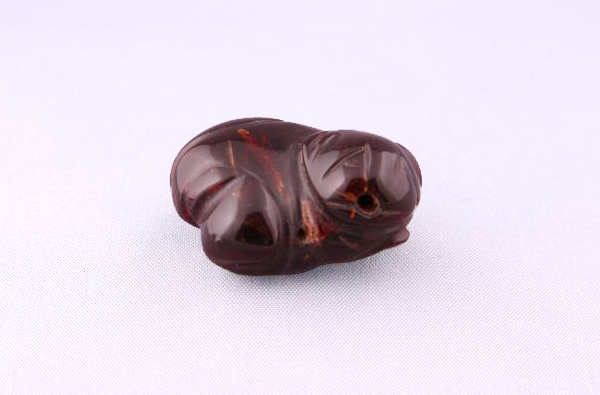
The AGGV has over 200 works of carved amber in the collection. Most are from the 16th – 19th century and were donated by Kathleen E. Reif. The oldest piece predates Tao Hongjing words. Crafted sometime between the 3rd century BC and the 3rd century AD, it is, fittingly, a Pendant of Recumbent Tiger. A wearable piece like this one would have allowed its owner to carry amber’s healing and protective associations with them as they moved through the world. This pendent is currently on display with several other amber pieces as part of the Permanent Collection Galleries, A View From Here.
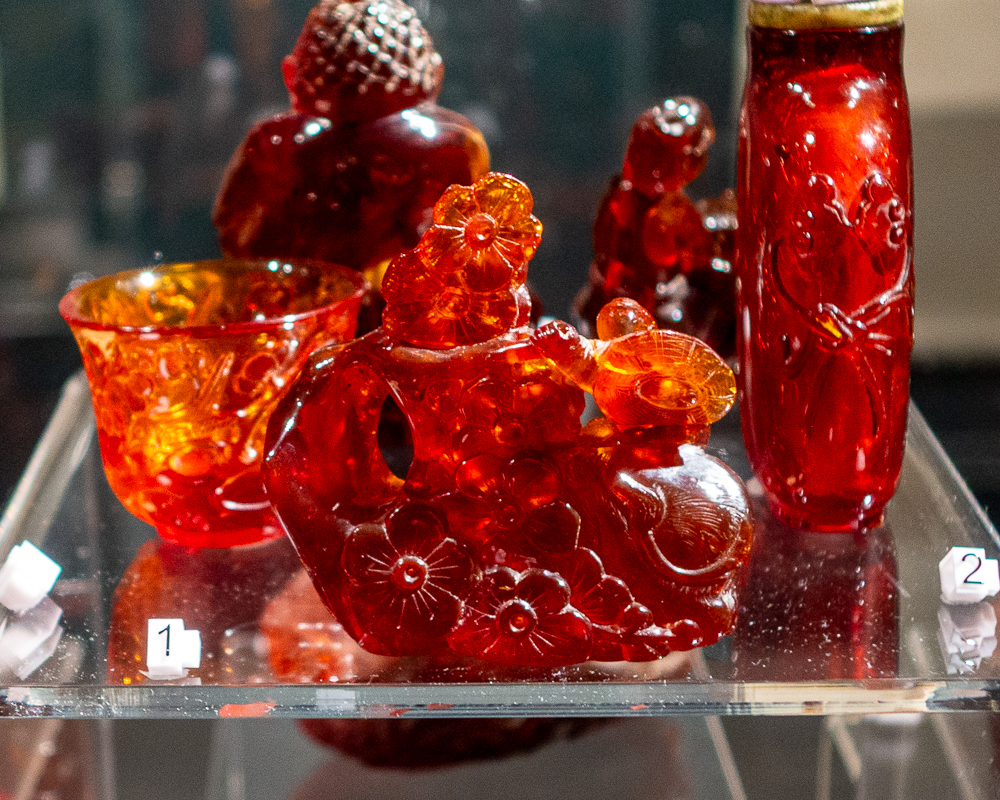
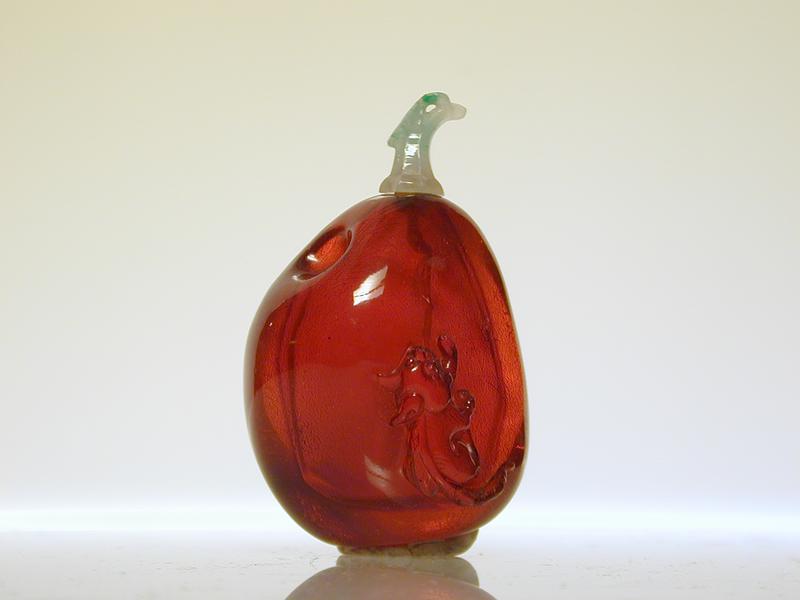
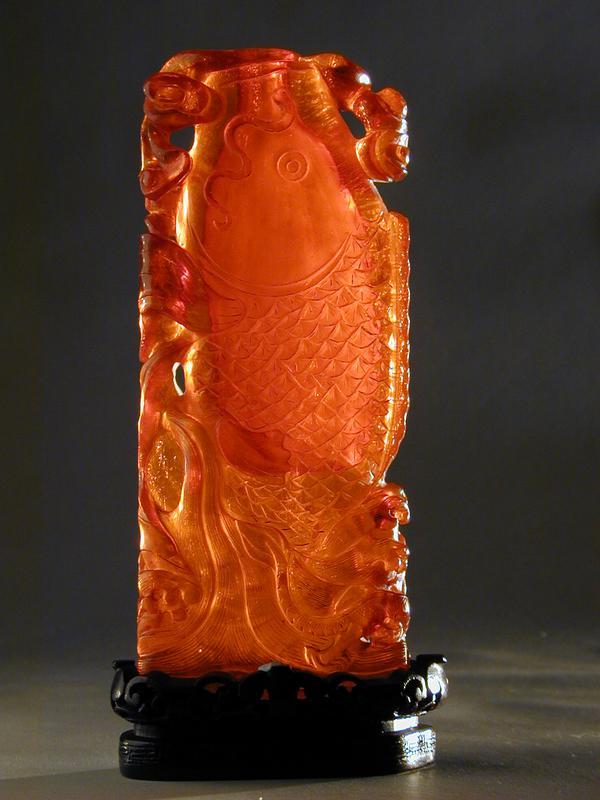
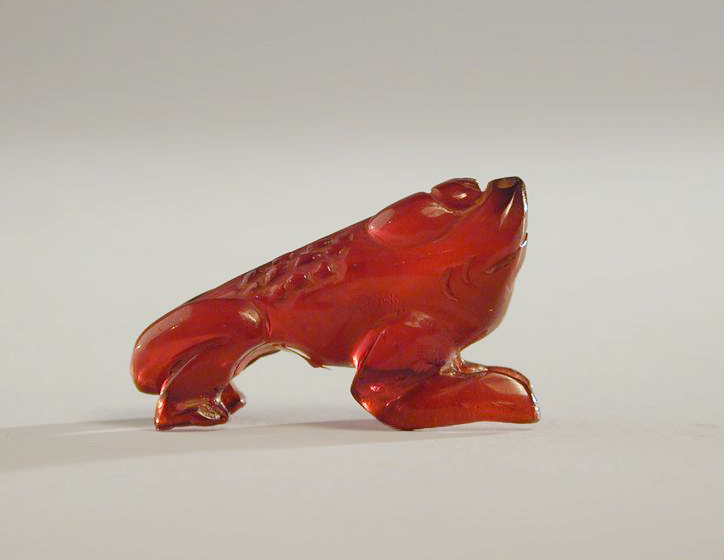
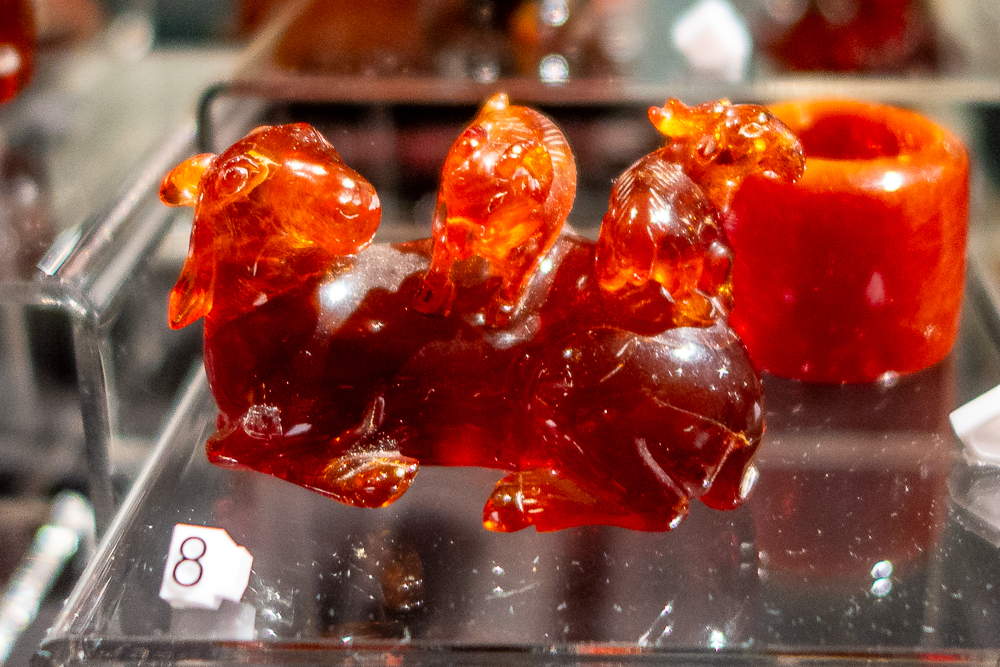
The selection, curated by Dr. Heng Wu, AGGV Curator of Asian Art, offers a comprehensive perspective of the artform. It includes household objects such as a brush washer, a wine cup, and several snuff bottles—one with a playful cat motif and delicate jadeite stopper. Most pieces are purely decorative, including a miniscule toad with tightly coiled hind-legs, seemingly ready to hop off; a maternal goat smiling at the two kids perched on her back; a substantial vase in the shape of a fish with individually decorated scales and flowing fins; and a design incorporating a child, a water buffalo, and a flowering tree all within little more than two cubic inches. Considered lighting within the gallery reveals the stunning translucency and play of colours the medium offers. Time spent looking closely at these diminutive artworks will be rewarded with the discovery of countless delightful and often surprising details.
[i] Laufer, Berthold. “Historical jottings on amber in Asia”. Memoirs of the American Anthropological Association. Vol. I, pt. 3. The New Era Printing Company, Lancaster, Pa., 1907. Pp. 217
[ii] Ibid. Pp. 218
Feature Image: Fish Form Vase, 18th century, amber, 22.9 × 9.7 × 3 cm. Gift of Kathleen E. Reif, AGGV 1998.042.080. Courtesy of the AGGV.