Woodblock printing in Japan stretches back to the 700s. It has encompassed many movements, with the ukiyo-e or “floating world” prints of the Edo period, notably Katsushika Hokusai’s The Great Wave off Kanagawa (1831), most popularly known around the world today. The artform was traditionally a collective endeavour between an artist who composed and painted the design, a carver who prepared the woodblock, and a publisher who handled production and distribution. This cohesive process merged the perceived sensitivity of painting with the ease of artistic movement that reproducible prints provided. Keinen and Bairei worked at a dynamic time. Japan had engaged in international trade only a decade after the artists were born, a shift that led to rapid expansion of interest in and markets for Japanese arts. Woodblock printing enjoyed a resurgence during their careers and remained a popular mode of creation and circulation throughout the first half of the 20th century, despite an increasing prevalence of technologies like lithography and photography.
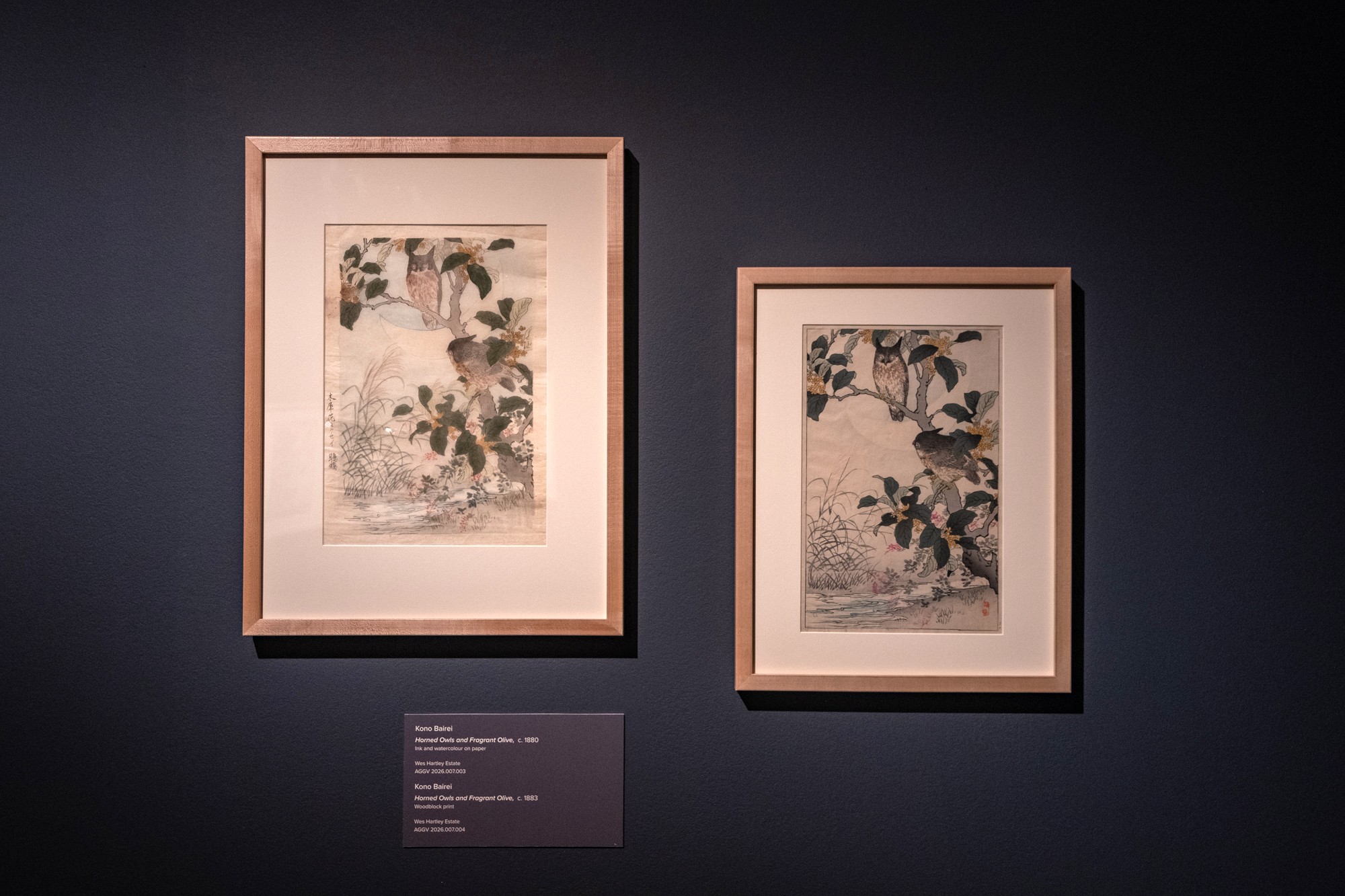
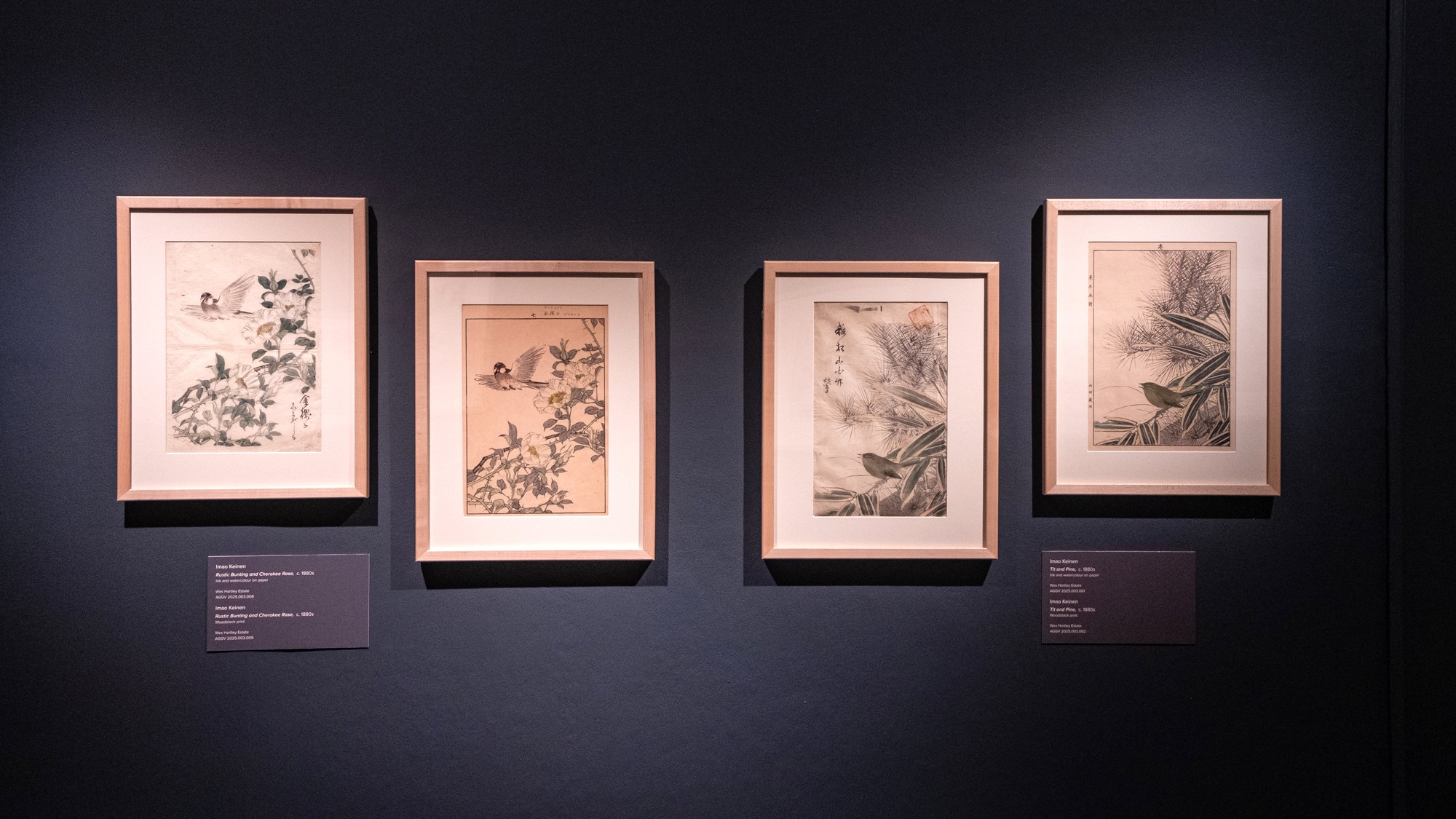
Keinen and Bairei were both particularly recognized for the bird-and-flower compositions that comprise From Brush to Block. The tradition, known as kachō-e in Japan, has its roots in China’s Tang dynasty huaniaohua paintings. The titles of these works, though in essence simply descriptive, convey a poetic approach. This exhibition includes Pear Blossoms and Bohemian Waxwings, Grey Herons and Camelias, and Horned Owls and Fragrant Olive, among others. The subjects are drawn from both natural and domestic environments. Keinen’s “rustic bunting” darts over a rose bush by a stream; his tit sings on a pine bough in the mountains. A cockatoo by Bairei playfully bites its foot while sitting on a swing near a vase arrangement, and his “exotic birds” with cascading tail plumes are nestled into a cultivated hanging basket of vibrant, multi-petalled chrysanthemums.
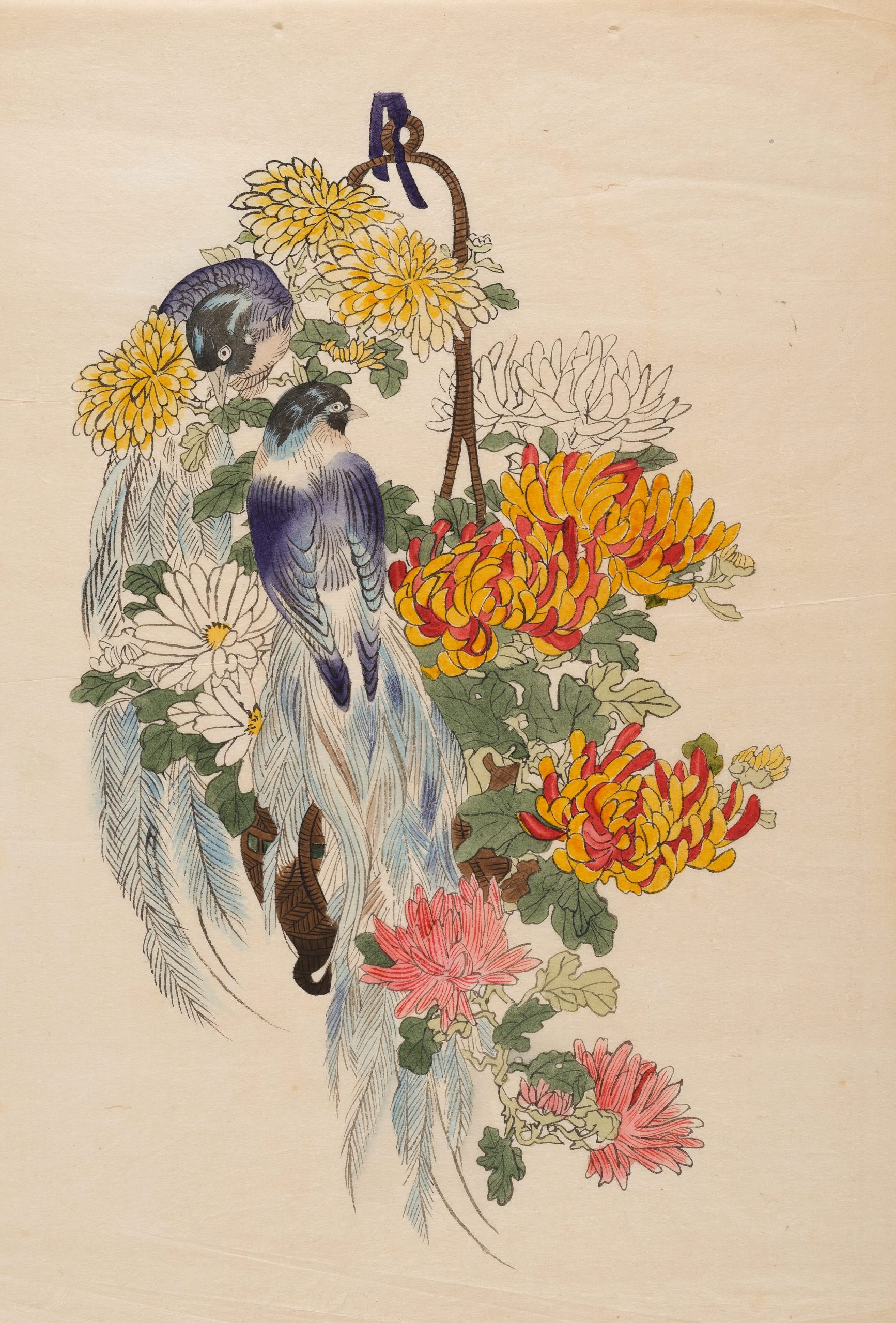
Within each pair of works the compositions are close to identical from painting to print, displaying the carvers’ skillful and meticulous adherence to the artists’ lines. And yet brush and block are distinct; it would be difficult to mistake one for the other. We would recommend putting aside a little more time than you might expect to fully explore the fascinating parallels and divergences this exhibition reveals.
From Brush to Block: Paintings and Prints by Imao Keinen and Kono Bairei runs until October 11, 2026.
Feature Image: Installation view of From Brush to Block: Paintings and Prints by Imao Keinen and Kono Bairei, featuring paintings and print by Imao Keinen. Photo by Kyra Kordoski. Courtesy of the AGGV.