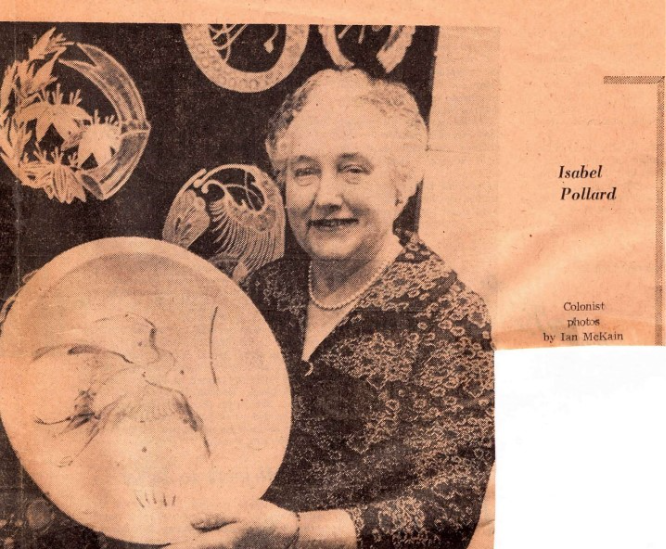
The Art Gallery of Greater Victoria has one of the finest collections of Japanese art in North America and certainly the most comprehensive in Canada. It began this collection in 1951 and now numbers almost 5,000 items including scholar paintings and Zen art, ceramics, lacquerware, metalwork, folk crafts, samurai paraphernalia, Buddhist sculptures, Geisha costumes, and of course, a large number of woodblock prints both historical and contemporary. The Japanese collection would not exist today were it not for the generosity and foresight of the Gallery’s early donors. Among the first donations received when Dr. Colin Graham became the Director of the Gallery in 1951 were Japanese prints. These came to the Gallery by two American sisters who had been stranded in Japan during World War II. At the time of this donation, formal collections storage did not exist at 1040 Moss Street and the works had to be stored in a supply closet next to cleaning fluids and chairs. Major donations of Japanese art came from Isabel Pollard in the 1960s and 1970s. Pollard was moved to build up an Asian Art collection for the Gallery in memory of her late husband Fred Pollard who had worked in the Japanese raw silk market up until his retirement in Victoria. Following Mr. Pollard’s death, Isabel Pollard moved to San Francisco but made frequent visits to Victoria, forming a decades-long friendship with Graham. The items acquired were not merely those which Pollard had procured in her travels to Japan in the late 1930s, rather 90 percent of the works donated were purchased for the Gallery at auction or from dealers in Tokyo, New York, San Francisco, Toronto, London, and Washington D.C. These were selected based on scholarly and historical merit and were representative of the best expressions of Japanese art, including sculpture, porcelain, robes, netsuke, screens, scrolls, ceramics, katagami, and woodblock prints. Pollard herself had studied art history, specializing in Japanese art to better equip herself for the acquisition role of patron.
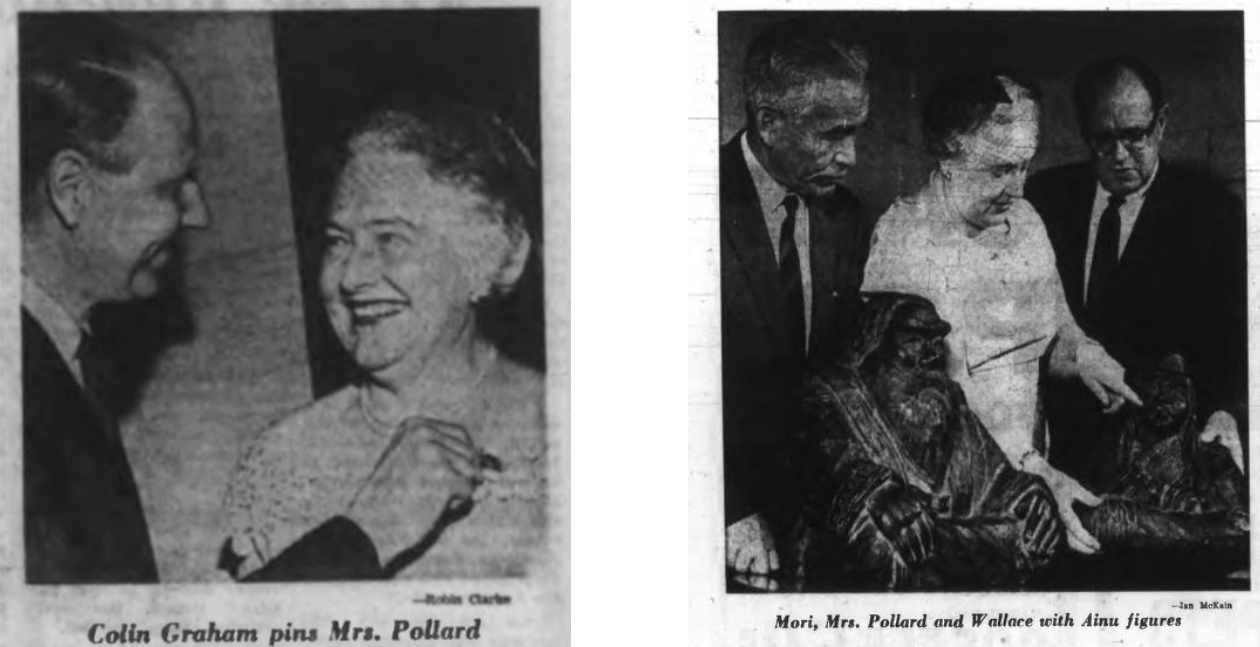
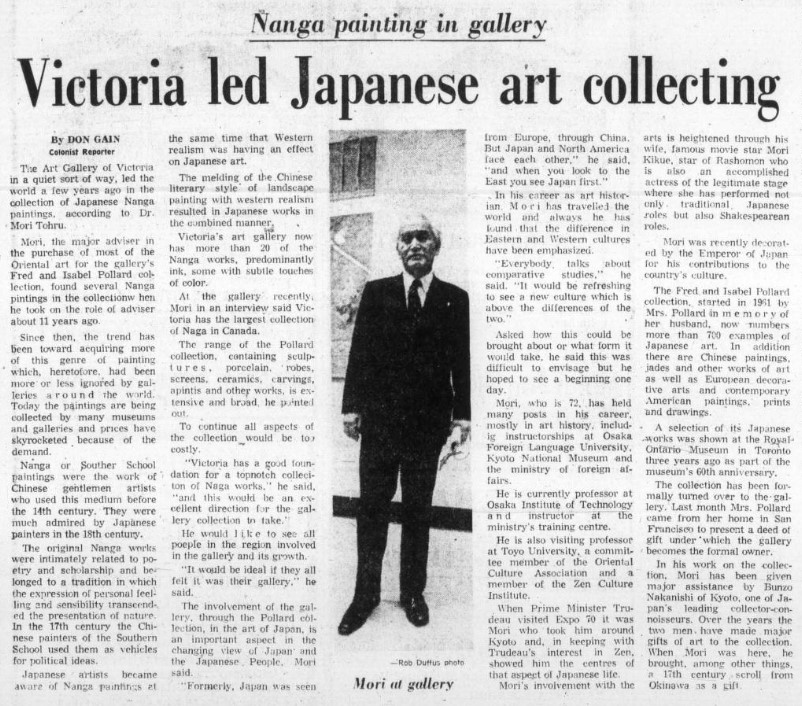
The first collaboration between Pollard and Graham was the purchase of woodblock prints by leading Japanese artists. Graham identified the works, for sale in New York, as being of interest and Pollard facilitated their purchase. Later pieces were chosen under the guidance of Graham and the advice of Dr. Toru Mori, onetime Chair of the Art History Department at the University of Osaka, and Bunzo Nakanishi, an art dealer and connoisseur from Kyoto. Several of these works were classified as being of national treasure quality by the Japanese government. Over two decades, Isabel Pollard donated almost 1,000 works of art. This included sought after and extremely valuable Edo period woodblock prints by Hokusai, prints by Saito, Watanabe, Harunobu, Buncho, Shunsen, and Choki. Pollard’s most reverent area of focus was the Nanga school of black and white painting, dating back to the late 18th Century, with works by Baiitsu, Goshun, and Shunkin representing the first such acquisitions anywhere in North America.
Pollard’s donations were not limited to Japanese art, in the mix were also Han Dynasty Chinese pottery, 16th Century Russian iconography, and Jordanian Arab textiles. At this significant period of growth for the Gallery, the momentum these gifts provided was invaluable. By the end of 1966, the rate of acquisitions at the Gallery was exceeded only by major galleries in Toronto and Montreal. Pollard reflected on her years of benefaction in 1973, the same year she received Honorary Citizenship from the City of Victoria, “I wanted to do something worthwhile, something to help people along the way. I am fond of the French Impressionists and post-Impressionists, but I can’t afford them.” Many artworks considered too costly for other larger Canadian museums to purchase were snapped up by Pollard. In ensuing years, the value of these works would rise dramatically in what would become a highly popular collectors’ field. Even in the early 1970s, Graham stated that it would be impossible to purchase at auction works that had been acquired just a few years prior. The growing affluence of Japan narrowed the market further. As Graham said in 1973, “The Japanese are buying back their national heritage.”
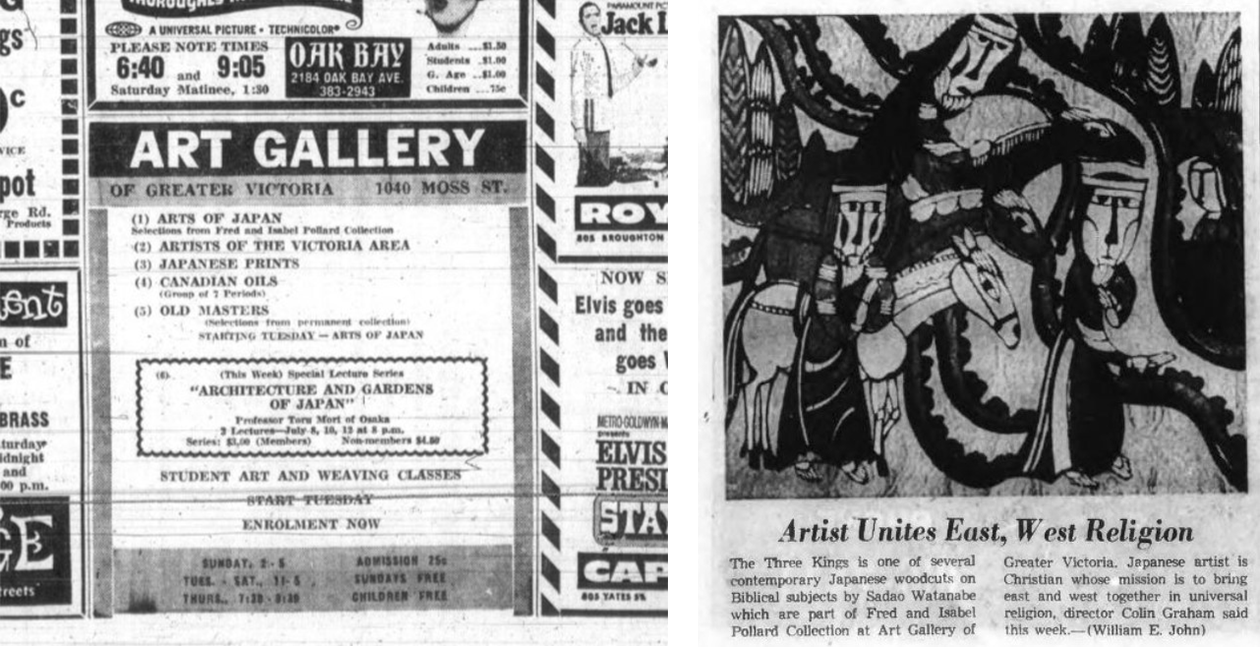
While Pollard’s donations were significant, subsequent benefactors also strengthened the Japanese art collection. A secondary influx of Japanese art donations would come in the 1970s and 1980s from R.W Finlayson and his wife, who donated Japanese Nanga and Zenga (Zen Buddhist) paintings. Another instrumental donor of Japanese art was Dr. Judith Patt, who supported the Gallery for over 40 years with both funds as a donor, and time and service as a member of the Board and its committees. Patt donated many Japanese paintings, prints from the 18th to 20th Century, modern Japanese silkscreen art, along with woodblock prints.
It is because of the dedicated philanthropy and goodwill of the Gallery’s early donors of Japanese art that a continued program of Asian Art exhibitions has been on offer for almost 80 years. And it is only fitting that On the Road will be presented in the Pollard Gallery, named in honour of Fred and Isabel Pollard in 1977.
On the Road: Journeys through Japanese Woodblock Prints runs from October 3, 2026 – April 4, 2027, and is presented by the Gallery Associates.
By Anu Henderson, AGGV Partnership Specialist.
DOUBLE VISION: Matching Fund Campaign
Don’t miss out on the chance to double your impact.
DONATE TODAY
Funds raised will support the upcoming exhibition, On the Road: Japanese Woodblock Prints from the AGGV Collection, featuring approximately 100 of the best of this collection on display, inviting viewers to journey through the landscapes and scenes captured in Japanese woodblock prints.
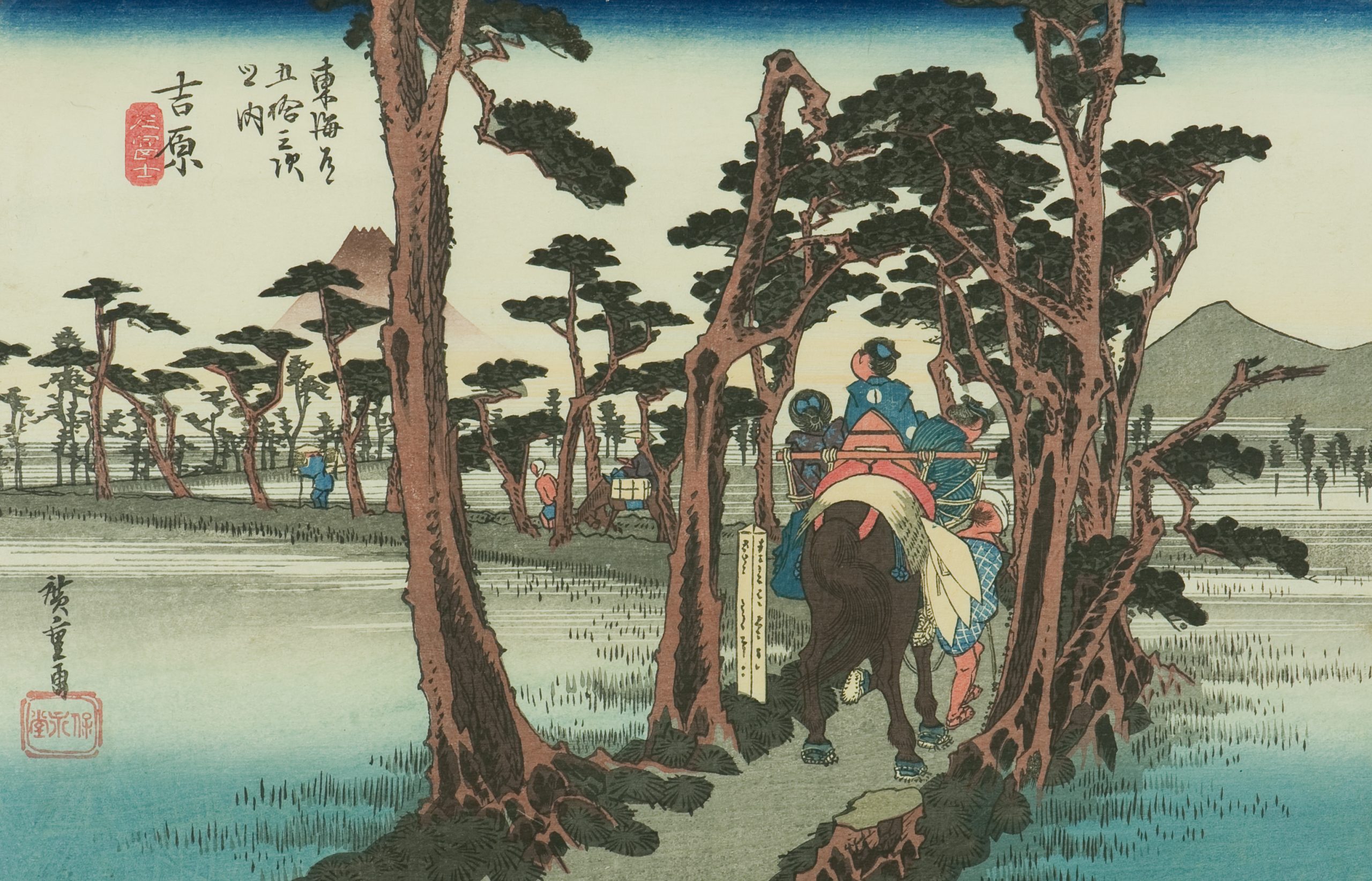
Feature Image: Ando Hiroshige (Japanese, 1797-1858), Yoshiwara, Fuji to Left, 1833-1834, woodcut print, 25.7 x 37.8 cm. Fred & Isabel Pollard Collection, AGGV 1965.037.001.