The Art Gallery of Greater Victoria is renowned for holding one of the largest collections of Asian art in Canada. Over my two decades of visits, I have repeatedly been drawn to the depth and quality of their works.
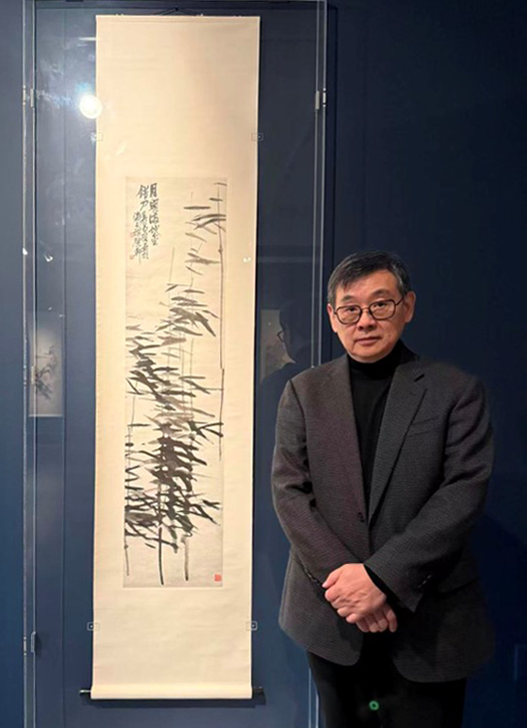
This was once again the case during a visit in January, 2026, to Fifty Shades of Ink: Ink Paintings from the AGGV Collection, an exhibition devoted primarily to monochromatic works from China and Japan. Complementing the paintings was a small display of objects associated with the practice of calligraphy and ink painting, including hardstone seals, ink stones, ink sticks, and seal paste boxes.
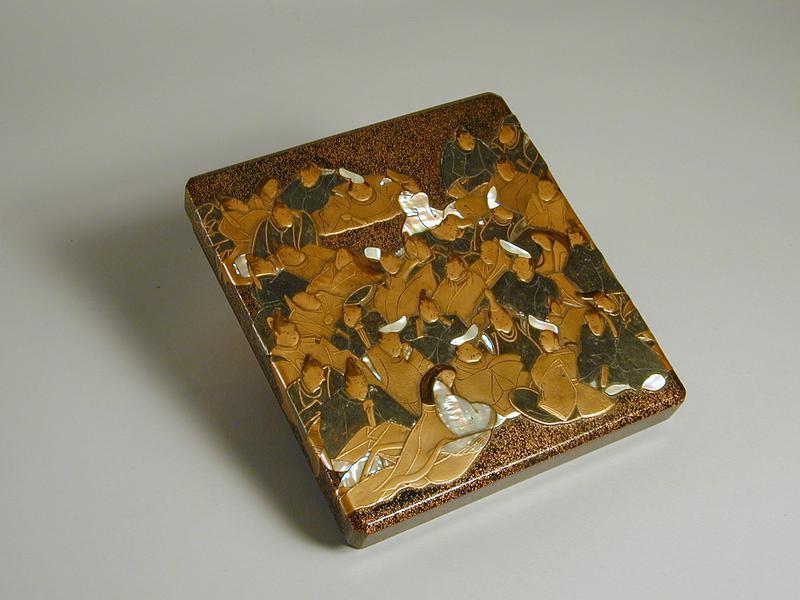
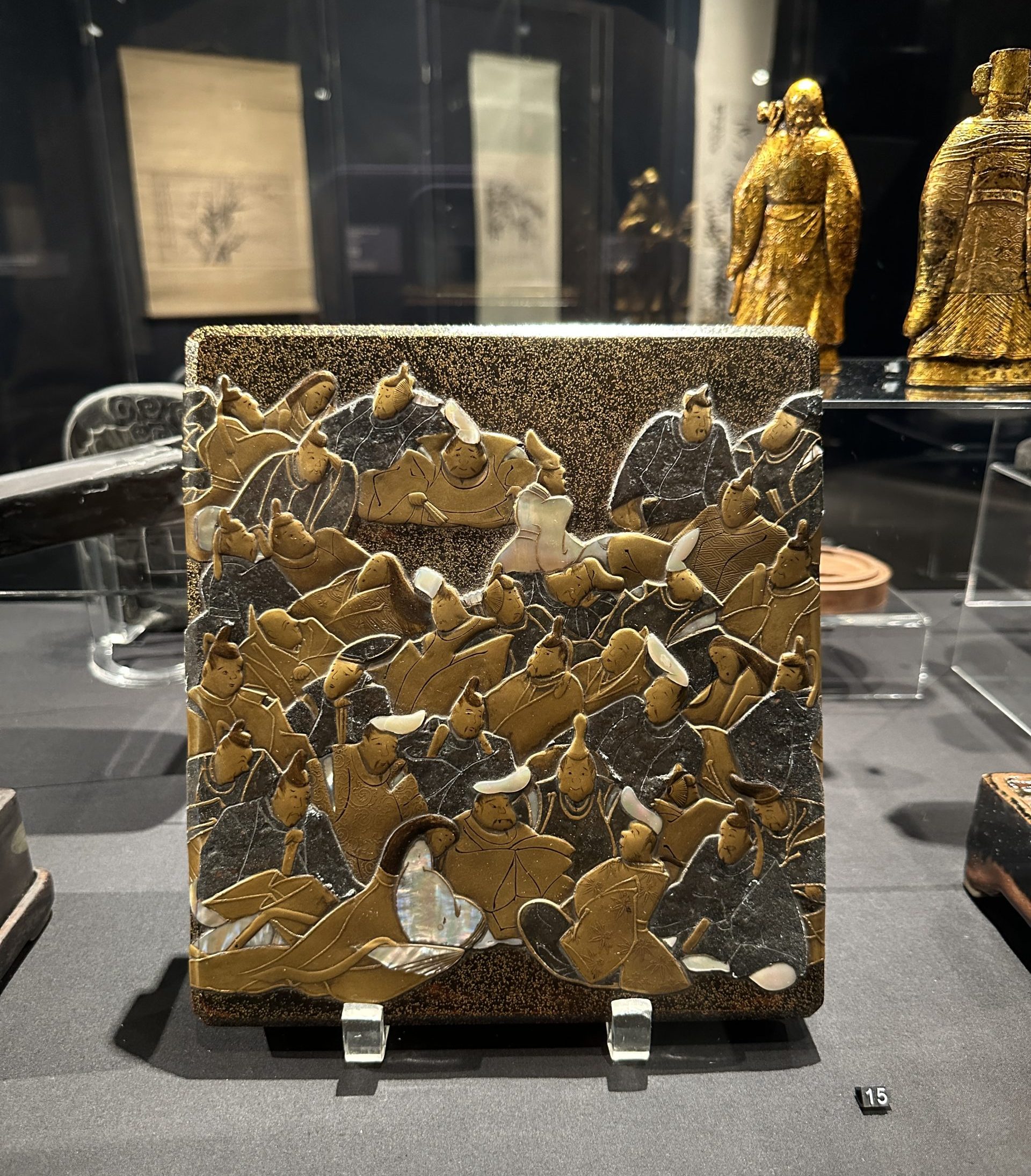
Among these objects, a Japanese lacquer writing box (suzuribako) stood out for its exceptional artistry [MC1.1]and decoration. Titled Lidded Box with Writing Accessories (AGGV 1966.056.001 a–e), the box entered the Gallery’s collection in 1966 as a donation from Fred and Isabel Pollard. While the box conforms to the standard form and dimensions of writing boxes and holds brushes, an ink stone, ink sticks, and a water dropper, its lid is distinguished by a remarkably intricate decorative program[MC2.1].
Covering the surface of the lid is a dense gathering of male and female figures dressed in courtly attire associated with the Heian Period (794–1185 AD). Executed in a combination of inlaid mother-of-pearl, pewter, lacquer, and gold, the figures are rendered with lively variation in posture and expression. Their faces are delicately painted, lending individuality to each character. Rather than presenting a single narrative moment, the composition invites close viewing, rewarding the eye with a rhythm of forms and gestures across the surface.
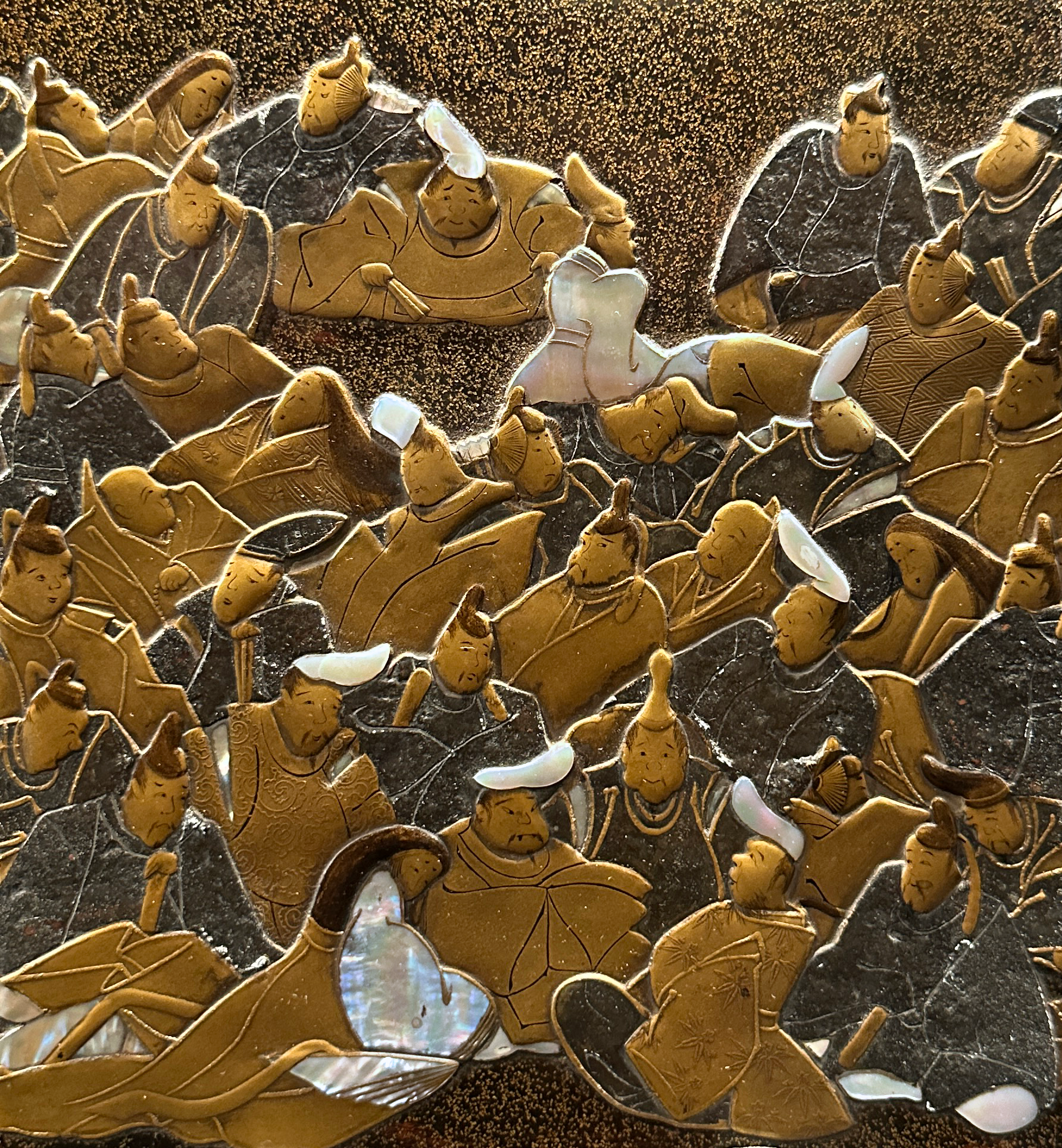
The scene depicts the Thirty-Six Immortals of Poetry, a canonical group of poets selected by the revered court poet Fujiwara no Kintō (966–1041 AD) to honour the greatest literary figures of Japan’s Classical Period. Including both male poets and five court ladies in this group of 36 [KN3.1]is particularly significant, suggesting that poetic achievement, rather than gender alone, shaped literary prestige during this formative time. By the eleventh [KN4.1]century, the poets’ works had been preserved in compendiums and visual representations of the group became popular subjects in paintings, books, and the decorative arts in later centuries.
Unlike early depictions, which often present the poets in a restrained and dignified manner, the figures on this writing box appear animated and playful. Their exaggerated proportions and expressive faces verge on caricature, conveying moods ranging from solemn concentration to gentle humour. Such treatment may reflect the emotions found in their individual poetry or interpretations derived from Kintō’s original selections.
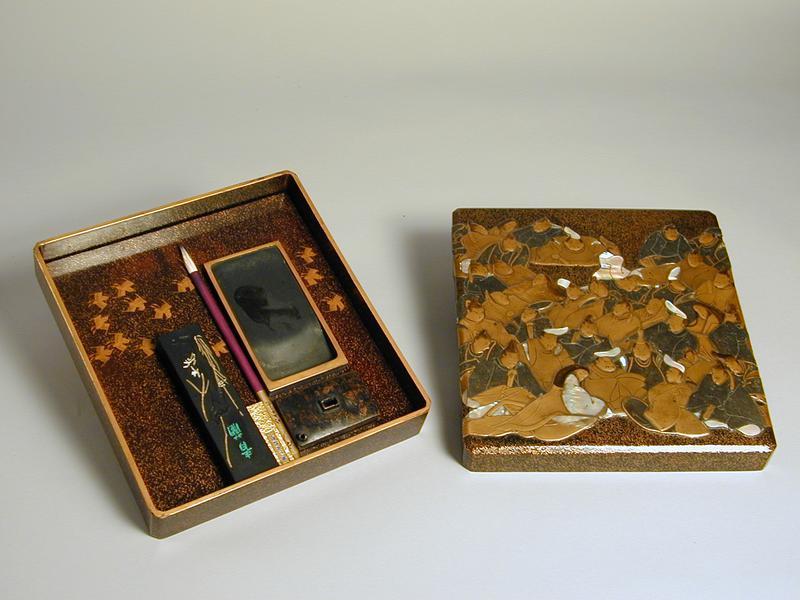
More than a utilitarian object, this suzuribako [MC5.1]exemplifies lacquerware as a form of elite decorative art. Inscribed with the date 1849, it represents a high-quality Edo Period (1603–1868) work created in dialogue with classical themes. Comparable representations of the Thirty-Six Immortals of Poetry appear in paintings held by the Cleveland Museum of Art and the Metropolitan Museum of Art, though such imagery remains rare on lacquer writing boxes.
Anthony Wu is an Asian art consultant, appraiser, and writer based in Toronto, Ontario.
Fifty Shades of Ink: Ink Paintings from the AGGV Collection runs until April 26, 2026
LEARN MORE
All Images: Lidded Box with Writing Accessories,1849, wood, lacquer; mother of pearl, pewter. Fred & Isabel Pollard Collection, AGGV1966.056.001. All images courtesy of the AGGV.